Intel Inside: how a chipmaker built a brand for a part nobody could see
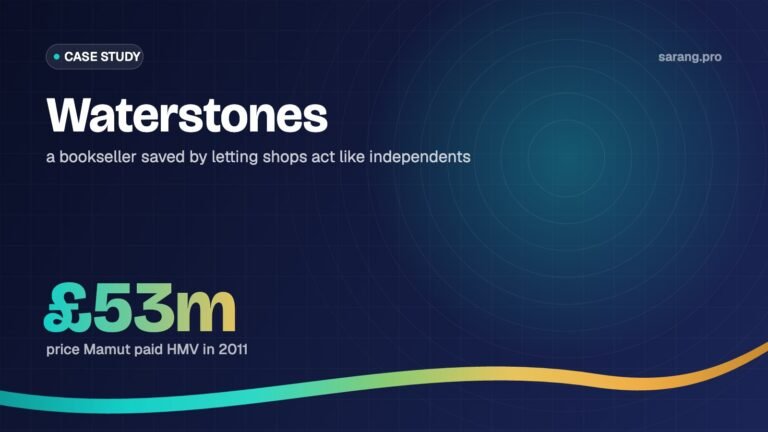
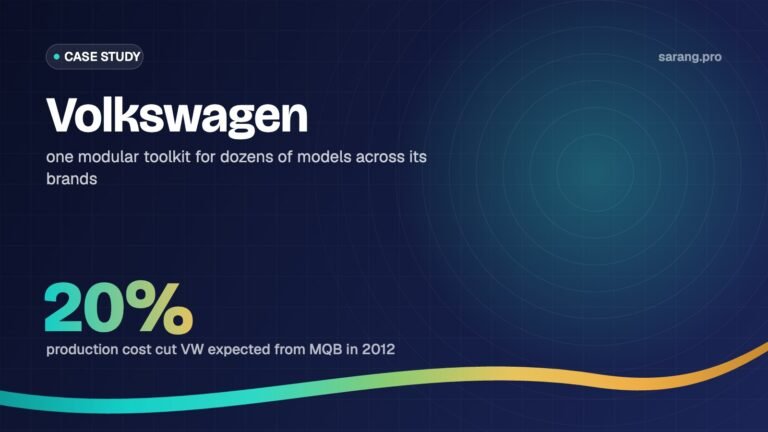
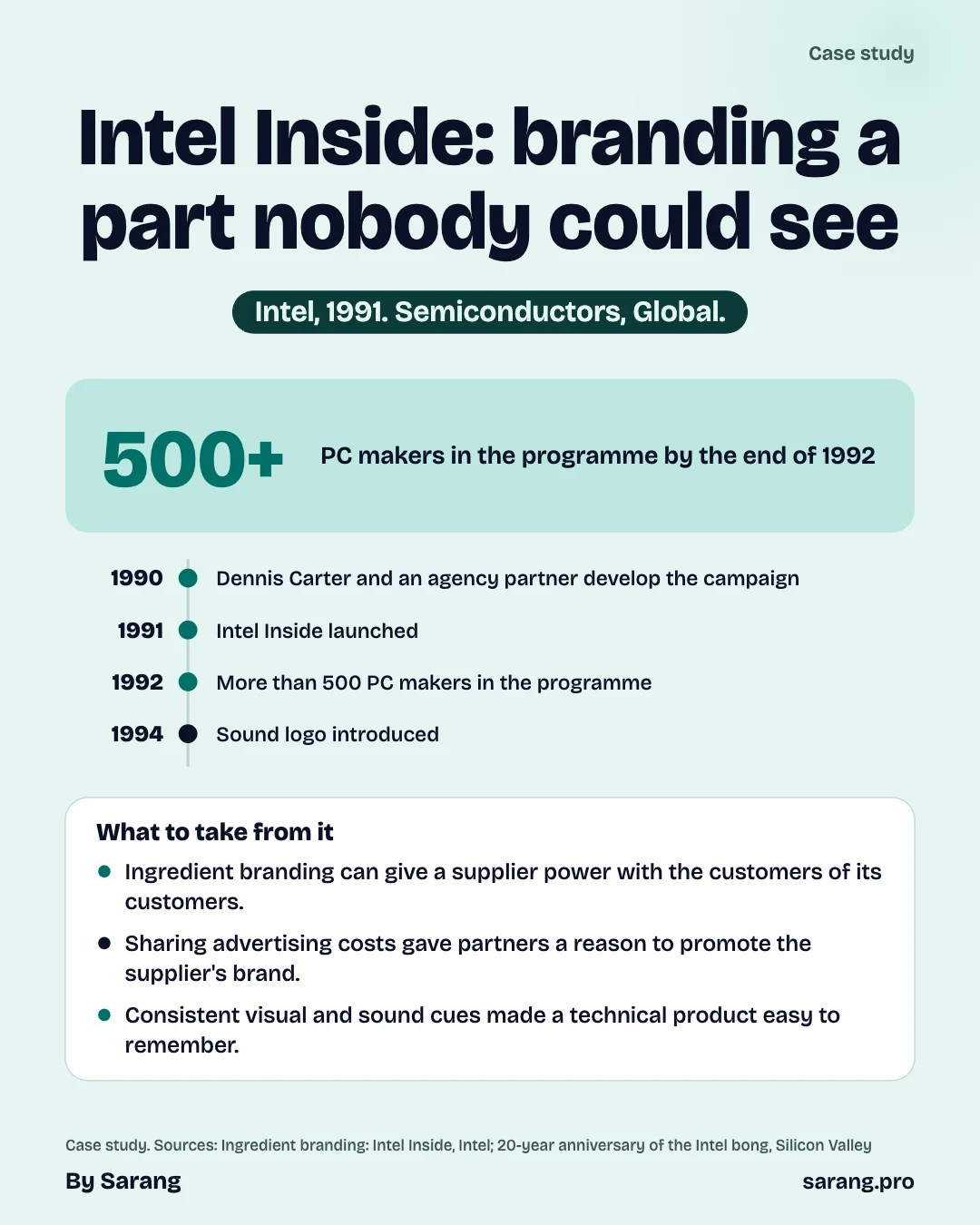
Intel put up $250 million in 1991 to make a hidden chip a brand; by 1992 over 500 PC makers had joined and revenue rose from $5.8 billion to $20 billion by 1996.
- Intel's initial investment in Intel Inside
- $250 million
- OEMs in the programme by end of 1992
- 500+
- share of eligible OEM ads carrying the logo
- 70%
- Intel revenue, 1992 to 1996
- $5.8 billion to $20 billion
The situation
In 1990 Intel had a problem that most component makers never face. Its microprocessors sat at the centre of almost every personal computer sold, yet the people paying for those computers had little idea what Intel was. Intel’s reputation was strong among the computer makers that bought its chips, known in the trade as original equipment manufacturers, or OEMs. Among ordinary buyers it was, in the words of Intel’s own history pages, largely unknown.
That mattered because of what had just happened with the 386. It was a major technical step forward, but when it came to market it sold worse than Intel’s older 286. Dennis Carter, a marketing specialist who worked as technical assistant to Andy Grove, drew a simple conclusion: customers did not understand what the 386 offered and stayed with the chip they knew. Intel’s answer was to speak to buyers directly, in plain terms, about a part they could not see inside a box they had not opened.
The programme that followed, Intel Inside, launched in the United States in 1991. Intel put up an initial $250 million, according to its own history pages. By the end of 1992 more than 500 OEMs had joined, and 70 per cent of the OEM advertisements that could carry the logo did so. Intel’s revenue went from $5.8 billion in 1992 to $20 billion in 1996, as a marketing encyclopaedia entry summarises the period. This case looks at why a chipmaker chose to advertise to people who never bought chips, how it paid for that, and what it cost and gained over the following three decades.
Background
A supplier known only to its customers
Through the 1980s Intel sold to a small group of buyers. The OEMs that built PCs chose processors on speed, price, supply and software compatibility, and they dealt with Intel’s sales engineers rather than with advertising. Earlier chipmakers had marketed only to those manufacturers, as the Encyclopedia of Major Marketing Campaigns entry puts it, so there was no habit among chipmakers of building a brand with the public.
The 386 changed the picture. Intel’s history pages describe it as a major technical advance, yet it did not catch on with buyers as quickly as Intel hoped, because the older 286 was familiar. Carter ran a campaign that put a red X over the number 286 in advertisements and presented the Intel386 SX as the better investment. Carter later said the exercise showed Intel it could explain technical matters in a basic way. That small test was the seed of the larger idea.
Where the idea came from
The origin of the Intel Inside idea is told in more than one way. Intel’s history pages credit Carter, who in 1990 teamed up with John White, a partner at a Salt Lake City advertising agency. The tech and design publication Tedium reports a different early thread: Intel’s Japanese arm developed a first version, which was meant to make Intel more attractive to local university graduates as an employer, according to Nobuyuki Denda, a former Intel Japan executive vice president, speaking in 2019. That version was inspired by the Dolby logo on audio equipment that used Dolby’s noise reduction. Toshiba was the first company to use the early “Intel In It” logo, in 1989, on a laptop, and Denda said he won over Toshiba’s PC unit head by offering discounted processors with a custom clock speed.
The two accounts are not in conflict so much as complementary. The Japanese experiment showed that a computer maker would carry a chipmaker’s mark if the terms were right. The US launch, with an agency that Tedium names as Dahlin Smith White, revised the slogan and the logo for a mass audience. Intel’s history pages say the logo was two words in informal script inside an imperfect circle, drawn by the agency’s art director.
How Intel made money before the campaign
Intel earned its revenue by selling microprocessors to OEMs. A customer paid for chips, and Intel’s income rose and fell with PC volumes. Any plan to build a brand had to work inside that model, because Intel’s customers, not the public, were still the ones writing the cheques. Whatever Intel did for consumers had to leave its relationships with those customers intact. The sources suggest that constraint shaped the design of the programme, which paid the OEMs rather than competing with them.
The industry
The PC market of the early 1990s was crowded. Many manufacturers assembled machines from standard parts, and the parts were largely interchangeable from the buyer’s point of view. A shopper comparing two beige boxes saw a brand on the front and a price on the ticket. The processor was a line on a spec sheet, if it was mentioned at all.
That arrangement suited the box makers, who liked to treat suppliers as interchangeable and to compete on price. It suited Intel less well. A chip that buyers could not name was a chip that rivals could undercut with a cheaper compatible part. The Tedium article records a warning from 1992 by Aaron Goldberg, chief executive of the research firm InfoCorp: he expected makers of graphics cards and storage to copy Intel’s model, and he warned that companies advertising premium components could be undercut by cheaper competitors. The risk he described is the risk Intel was trying to remove.
The industry also had rules, written and unwritten, about how a supplier could influence its customers. Tedium reports that the US Federal Trade Commission took an interest in the Intel Inside programme in 1991. A dominant supplier that pays its customers to display its logo invites questions about whether the payments tie customers too tightly. That question came back, in a much sharper form, in the 2000s, and it is covered below.
The decision
The choice facing Intel’s marketing team was how to make consumers care about a part inside a product made by someone else. Intel’s own pages and the marketing encyclopaedia entry show the main options. The sources do not describe a formal options paper, so the three below are framed as the obvious alternatives, with the evidence for what Intel actually weighed.
Option one: carry on selling only to OEMs
The simplest course was to do nothing new. Intel’s customers were the PC makers, and their orders were the revenue. The risk was the one the 386 had just demonstrated: if buyers did not value what the chip did, they would stay with older, cheaper products, and the OEMs would follow demand. A purely trade-facing approach left the buying decision in the hands of people who did not know Intel existed.
Option two: advertise Intel directly
Intel could have bought its own advertising and left the OEMs out of it. It did run its own television and print advertisements as well, and the Encyclopedia of Major Marketing Campaigns entry records the first print advertisement in April 1991 and the first television commercial on 11 November 1991, which promoted the 486 chip through a special-effects tour of a PC’s interior. But a campaign paid for by Intel alone would have been expensive and would have reached buyers who then walked into shops and chose a computer by its maker’s name.
Option three: pay OEMs to carry the mark
The route Intel chose combined the two. The logo would appear in OEM advertisements and on the computers, and Intel would help pay for the advertisements. Tedium describes the mechanism. A PC maker paid Intel for chips, and a share of that contract value went into a co-operative marketing fund. The maker could draw on the fund to subsidise its own advertising, but only if the Intel Inside logo appeared in the advertisement. Intel’s history pages say it subsidised OEMs that put the logo on their products and in their ads.
The attraction was clear. The box makers received money towards advertising they wanted to run anyway, and Intel received repeated exposure of its mark in other people’s campaigns. The cost to the OEMs was a little of their own brand space, and the cost to Intel was a large fund. A sceptic, Michael Murphy, editor of the California Technology Newsletter, called the whole programme money down the drain, as Intel’s history pages record.
What they did
1989 to 1990: the early tests
The first use of an Intel-and-computer co-branded mark came in Japan in 1989, with Toshiba, according to Tedium. In the United States, the red X campaign for the 386 SX tested whether plain-language comparison could move buyers. Carter said it did. In 1990 he and John White began work on a broader scheme.
1991: launch
The programme was launched in the US in 1991. Tedium gives July 1991 for the launch and says its first name was “Intel In It”; the encyclopaedia entry dates the first print advertisement to April 1991. The sources give slightly different anchor dates, which is common when a programme starts with test advertisements before an official start. By Intel’s own count about 350 manufacturers joined the programme in 1991, according to Tedium.
The first television commercial on 11 November 1991 took the viewer through the inside of a PC to the 486 chip. The same year, a print advertisement became known as the “measles” ad, according to Intel’s history pages.
1992 to 1993: scale
By the end of 1992 more than 500 OEMs took part, and 70 per cent of eligible OEM advertisements carried the logo. In 1993 the Pentium launched, and the Encyclopedia of Major Marketing Campaigns entry says that from June 1993 the advertising shifted to ordinary consumers and what they could do with their computers. The same entry reports that Financial World ranked Intel’s brand third most valuable in the world in 1993.
1994: Pentium as a badge
In 1994 the branding was extended to the Pentium name. Tedium argues this created the processor badge that later became familiar on laptops and desktops. At first the branding did not refer to a particular chip, which let the programme carry on across product generations. The Pentium name identified a product, while Intel Inside was the umbrella over it.
1997 onwards: mass media
Intel ran a Super Bowl commercial in 1997 that introduced the Intel Dancers, made by Industrial Light and Magic, and a series with Homer Simpson, according to Intel’s history pages. The Encyclopedia of Major Marketing Campaigns entry ties the 1997 spot to the Pentium II. The programme had by then moved from OEM co-op to a brand that Intel promoted in its own name.
What happened
Growth and recognition
The figures in the sources point in one direction. Intel’s revenue rose from $5.8 billion in 1992 to $20 billion in 1996. Financial World placed the Intel brand third in the world in 1993. Near the end of the 1990s Advertising Age called Intel Inside the most effective co-operative advertising programme in history, according to Intel’s history pages. Those are the claims made for it by Intel and by trade sources; none of the sources separates the effect of the campaign from the effect of the PC market itself growing fast, so the revenue figures show the context rather than a measured result.
| Year | Event |
|---|---|
| 1991 | US launch; about 350 manufacturers join (Tedium) |
| 1992 | More than 500 OEMs; revenue $5.8 billion |
| 1993 | Pentium launches; brand ranked third (Financial World) |
| 1996 | Revenue $20 billion |
The Pentium flaw, 1994
The brand was tested hard in the autumn of 1994. Intel’s division algorithm for the first-generation Pentium relied on a lookup table in which five of 1,066 populated cells held 0 instead of 2, so some floating-point divisions came out wrong. Thomas Nicely, a mathematics professor at Lynchburg College, found it while running calculations on several computers, one of them a Pentium. By October 1994 he was certain the fault lay in the processor and wrote to Intel. News spread quickly online, and the media took it up about a week later; CNN ran a segment.
Intel’s first response was to say it would not replace affected chips unless customers could show they met the bug. That stance did not last. IBM, a long-standing partner, stopped selling Intel-powered PCs, and IBM and other OEMs offered replacement chips. On 20 December 1994 Intel announced a recall of all affected Pentiums. Its 1994 annual report put the cost at $475 million. Tom’s Hardware, writing on the thirtieth anniversary, calls it Intel’s first CPU recall and first major hardware error.
The episode is a clean test of the programme. Because Intel had spent three years persuading ordinary buyers to look for its name, ordinary buyers also knew whom to blame. A supplier invisible to the public could have left the problem with the box makers. Intel had made itself the visible party, and the sources show that it paid for that visibility in the recall. They do not show whether sales or the brand’s standing suffered afterwards in a measurable way, so that part is left open.
Extension to platforms
In 2003 Intel introduced Centrino, which Tedium describes as its first marketed combination of several hardware components. It came with its own stickers, including combination stickers that let a user peel off the processor name. This showed the badge model could be applied to bundles as well as chips.
The rebrand of 2005 and 2006
In late 2005 Intel announced that it was retiring the Intel Inside slogan and the lowered “e” logo, replacing them with an oval swirl around the company name and the line “Leap ahead”, according to an NBC News report. The same report says Intel would keep an Intel Inside marketing programme under which it helped PC makers advertise products using its chips. It also put Intel’s brand at number five in the world, worth an estimated $36 billion according to Interbrand, and described a move from selling individual chips to selling platforms that joined PCs with digital media and networks. Paul Otellini, chief executive since May, would give the details at the Consumer Electronics Show, and Eric Kim, hired from Samsung Electronics, had been promoted to chief marketing officer. Spokesman Bill Calder said the change took the brand strategy and aligned it with the business strategy.
Other views
Antitrust enforcers
The co-op model worked because Intel held a very large share of the market, and that same position drew the attention of regulators. On 13 May 2009 the European Commission fined Intel 1.06 billion euros for abuse of a dominant position. The Commission found that Intel held at least 70 per cent of the worldwide x86 processor market from October 2002 to December 2007 and that the abuse lasted five years and three months.
The conduct the Commission described was not the Intel Inside logo programme. It was conditional rebates and payments. One computer maker received rebates between December 2002 and December 2005 on condition that it bought exclusively from Intel. Another received rebates conditional on buying at least 95 per cent of its business desktop needs from Intel. A retailer, Media Saturn Holding, received payments between October 2002 and December 2007 on condition that it sold only Intel-based PCs. The Commission also described payments to delay AMD-based products, such as one maker delaying an AMD notebook from September 2003 to January 2004. In one instance AMD offered one million free processors to a manufacturer, which took only 160,000 because accepting more would have cost it Intel’s rebates on its other purchases.
The Commission’s case is a reminder that the co-op logic and the rebate logic come from the same commercial family: money from the dominant supplier that shapes what a customer does. Tedium adds that antitrust enforcers worldwide scrutinised Intel’s rebates through the 2000s and that some fines from that decade were overturned as recently as January 2022. The source does not say which fines were overturned or why, and the 2022 judgment itself is not covered here.
Rivals and their customers
Not every computer maker took part in the same way. Tedium notes that in 2007 Steve Jobs explained that Apple did not use Intel Inside stickers, though Apple packaging sometimes did show Intel logos. It also cites a 2010 column by David Pogue reporting that AMD’s own research found consumers disliked stickers, and that AMD had suggested it might end its own sticker programme, which it had not done by 2022. These are second-hand claims about research the article does not reproduce.
Sceptics of the money
Michael Murphy’s early judgment that the programme was money down the drain turned out to be wrong by the standard of Advertising Age’s verdict later in the decade. It is still a fair statement of what the bet looked like in 1991. A $250 million outlay on a part that consumers could not see was a large wager. The sources give no figure for Intel’s total spend across the 1990s, and they do not report how much of any gain came from the programme itself.
Reading it through a framework
Ingredient branding and value chain
Intel Inside is a standard example of ingredient branding: a supplier markets a component to the end customer so that the customer asks for it by name. A value chain map shows why this was hard. Intel sat upstream of the box maker, which sat upstream of the retailer, which sold to the buyer. Intel had no direct contact with buyers and no control over the shelf. The co-op fund gave it a way to buy visibility in the part of the chain it did not own, by making its logo a condition of the subsidy. The cost was shared: the OEM gave up some advertising space, and Intel gave up some of the margin on each chip.
The evidence for the value of the arrangement is strong on adoption and weaker on causation. Over 500 OEMs took part by the end of 1992, and 70 per cent of eligible advertisements carried the logo, so the offer was clearly attractive to the people who accepted it. Whether buyers then paid more or switched from rivals is not shown in the sources.
Porter’s five forces
Seen through Michael Porter’s five forces, the programme was a response to buyer power. The PC makers were powerful customers who could play suppliers against each other, and they were about to gain more leverage if the chip became a commodity. Creating consumer demand for Intel by name shifted some bargaining power back towards Intel, because an OEM that left out Intel would lose a feature that shoppers had learned to look for. It also raised barriers to entry, since a compatible chip from a rival now had to overcome a known brand as well as match a specification. That is the logic Goldberg described when he warned of cheaper rivals undercutting premium components.
The same lens shows the cost. A supplier that gains power through payments and brand can be accused of abusing it, and the European Commission’s 2009 decision shows the power Intel held at that stage. The strong position that made Intel Inside work also made later conduct a matter for regulators.
Since then
The programme outlived the 2006 rebrand that was said to retire it. On 2 September 2020, Intel unveiled a new logo, the fourth in its history, dropping the circular design that had been in use since 2006. CNN reported that the Intel Inside stickers were redesigned and that the company modernised its commercial jingle. Chief marketing officer Karen Walker said the brand identity had been largely untouched while the company shifted from processors towards artificial intelligence software and internet-of-things products. The refresh came with the 11th-generation Core processors and a new brand, Evo, for high-end laptops. CNN also noted growing competition from AMD and Arm, and Apple’s plan to phase out Intel chips in Macs in favour of its own Arm-based chips.
Tedium, writing in 2022, observes that Intel now promotes hardware platforms through Intel Evo and markets graphics chips such as Iris with badges as well. So the pattern of naming the component survived, even as the strength of Intel’s market position weakened. The sources used here stop at 2022, so developments in 2023 to 2026 are not covered.
What to take from it
- A component maker can build a consumer brand by making its name a condition of a subsidy, so that its customers pay for part of the advertising while the supplier gains the exposure.
- Plain-language comparison can move buyers who do not follow technical specifications, as the red X advertisements for the 386 SX suggested to Intel’s own team.
- A visible brand carries visible responsibility: because buyers knew the name Intel, the 1994 Pentium recall, which cost $475 million, reflected on Intel rather than on the computer makers.
- Programmes that rely on a dominant market share can attract regulators, and the 2009 European Commission decision shows how rebate structures were judged separately from the logo scheme.
- Brand programmes need renewing as the business changes, which is why Intel adjusted its identity in 2006 and again in 2020 while keeping the habit of naming its chips.
Questions to think about
- Which kinds of component or ingredient would be hard to brand to the public in the way Intel did, and what would stop a supplier from copying the model?
- Should a supplier that gains consumer recognition expect to share more of the blame when something goes wrong, as Intel did in 1994, and how could it prepare for that?
- Where does a co-operative advertising fund end and a restriction on trade begin, using the contrast between the logo scheme and the conditional rebates in the 2009 decision?
- If Intel’s market share fell, would the Intel Inside logo become more valuable to the company or less, and why?
Concepts at work
Three ideas run through this case: ingredient branding, co-operative advertising and dominant-position abuse in competition law. Explore them in Insights.
Written from the public sources listed below. Figures are as those sources report them.
Framework
Timeline
- 1989Toshiba first uses an early Intel co-branded logo on a laptop
- 1990Dennis Carter and John White begin work on the campaign
- Apr 1991First Intel Inside print advertisement
- Jul 1991US launch (Tedium)
- 11 Nov 1991First TV commercial, for the 486
- 1992More than 500 OEMs have joined
- 1993Pentium launches; Financial World ranks Intel's brand third
- 20 Dec 1994Intel recalls affected Pentiums
- 1997Super Bowl spot and Intel Dancers
- 13 May 2009European Commission fines Intel 1.06 billion euros
- 2 Sep 2020New Intel logo; Intel Inside stickers redesigned
Recap cards
Tap a card to check yourself.
Sources and credits
- Intel: Ingredient Branding (Virtual Vault)
- Tedium: The history of computer stickers
- WARC: Intel Corporation, Intel Inside campaign (Encyclopedia of Major Marketing Campaigns)
- Tom's Hardware: Thirty years since the Pentium FDIV bug
- NBC News: Intel unveils new logo in brand overhaul
- CNN Business: Intel unveils new logo
- European Commission: Commission imposes fine of 1.06 bn on Intel (IP/09/745)